  • INT
  • DE
  • FR
  • IT
  • NL

User account menu

  • Log in
Home
  • The Magazine
    • All Issues
    • Glossary
    • For Authors
    • Magazine Team
  • Blog
    • All Blog Posts
    • For Authors
  • Book Reviews
    • Book Reviews
  • The Foundation
    • What is In-Mind?
    • Credits
  • Donate

Psychology for You!

  • Magazine Issue
    04/2026

    Trapped by tranquility: Understanding dependence on benzodiazepines

    • written by
    • Joana Mihani
    Benzodiazepines offer relief from anxiety and insomnia , yet their calming effects can quietly lead to physical and psychological dependence . This piece explores how that reliance develops and why withdrawal requires support and patience. Recovery is possible when guidance, compassion, and gradual healing replace fear.
    Read more
    • Log in to post comments

  • Magazine Issue
    04/2026

    Now is the time – A discussion on current sexual misconduct prevention and provider readiness

    • written by
    • Julia L. Lancaster
    Despite many efforts to prevent sexual misconduct, this unwanted behavior persists in private and public spaces. Given the prevalence of sexual misconduct and the likelihood that mental health care providers will be called upon during their careers to support survivors, how prepared are they?
    Read more
    • Log in to post comments

  • Magazine Issue
    03/2026

    How do we interpret social situations marked by ambiguity?

    • written by
    • Lisa Vos,
    • Tom Smeets,
    • Jonas Everaert
    Imagine sending a message to a friend, and hours pass without a reply. Did you do something wrong? Are they upset? Or are they simply busy? Every day, we face moments like these: ambiguous social situations that leave us wondering what others think or feel. How we interpret these moments can shape our emotions, thoughts, social connections, and our own behavior, and can even impact our mental health. In this article, we review recent research from our team that sheds light on how people make sense of such ambiguous social cues, and why some of us tend to interpret them...
    Read more
    • Log in to post comments

  • Magazine Issue
    03/2026

    Children in front of a screen: what is the impact of technology on their development?

    • written by
    • Marica Notte,
    • Daniela Renzi
    The use of technology, particularly digital devices, is having a negative impact on children’s psychological and physical development. This is largely due to two factors : today’s generations are growing up in an increasingly digital environment , and parents often allow extensive or unregulated use. In response, the international medical community has put forward recommendations aimed at regulating device use to minimize both short and long-term consequences.
    Read more
    • Log in to post comments

  • Magazine Issue 04/2026

    Trapped by tranquility: Understanding dependence on benzodiazepines

    written by: Joana Mihani
  • Magazine Issue 04/2026

    Now is the time – A discussion on current sexual misconduct prevention and provider readiness

    written by: Julia L. Lancaster
  • Magazine Issue 03/2026

    How do we interpret social situations marked by ambiguity?

    written by: Lisa Vos, Tom Smeets, Jonas Everaert
  • Magazine Issue 03/2026

    Children in front of a screen: what is the impact of technology on their development?

    written by: Marica Notte, Daniela Renzi
  • Magazine Issue 07/2017

    Straight talk about gaydar: How do individuals guess others’ sexual orientation?

    written by: Fabio Fasoli, Peter Hegarty
    Individuals guess women’s and men’s sexual orientation on the basis of visual, non-verbal, and vocal cues. People use these cues as signs of others’ sexual orientation . Here, we review... more
  • Magazine Issue 03/2017

    In Defense of Anger: An Evolutionary Necessity and its Contemporary Applicability

    written by: Cameron Stuart Kay
    Anger is defined as an unpleasant feeling that results from an unpleasant event and it is, therefore, not particularly surprising that so many people dismiss it as a pointless emotion... more
  • Magazine Issue 03/2017

    Asking Children to Talk About Abuse: Can Research Help Improve Police Interviewer Skills?

    written by: Mikaela Magnusson, Emelie Ernberg, Sara Landström
    Child abuse cases often lack corroborative evidence in the form of injuries, DNA or direct witness observations. Instead, the most important source of information about the alleged crime is typically... more
  • Magazine Issue 03/2017

    Sleepy Politics: How Sleep Deprivation can Affect Political Decision Making

    written by: Jan Alexander Häusser
    In today’s political landscape, important decisions are often made by those who are severely sleep deprived. This raises the question of potential consequences of sleep deprivation for political decision making... more
  • Magazine Issue 10/2016

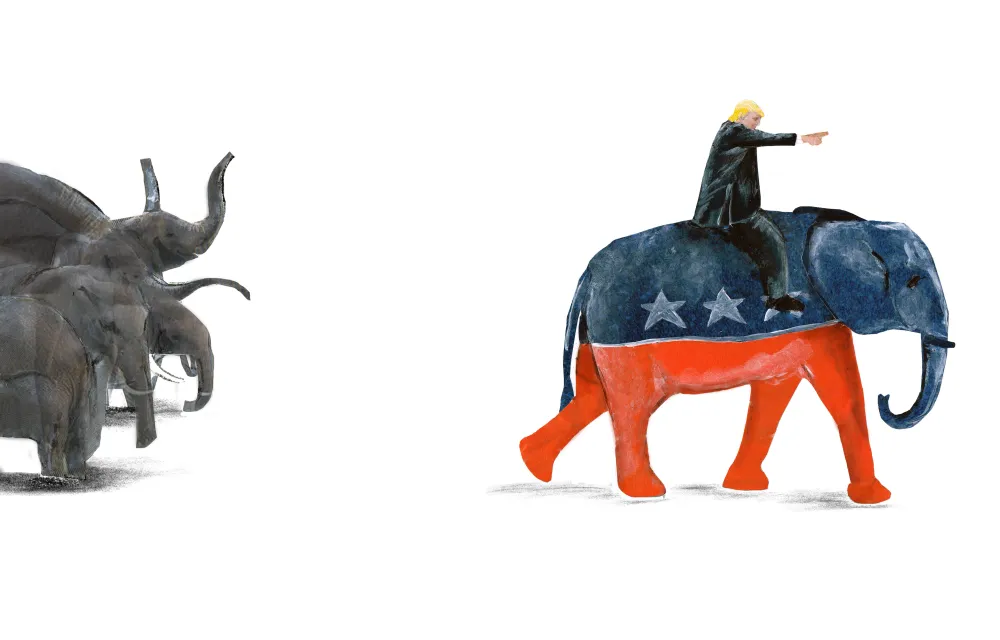
    Why Has Donald Trump Lost So Much Conservative Support?

    written by: Chris Martin
    Donald Trump has lost the support of many conservatives, a problem that may be explained by his lack of conscientiousness . This trait is more characteristic of conservatives than liberals... more
  • Magazine Issue 10/2016

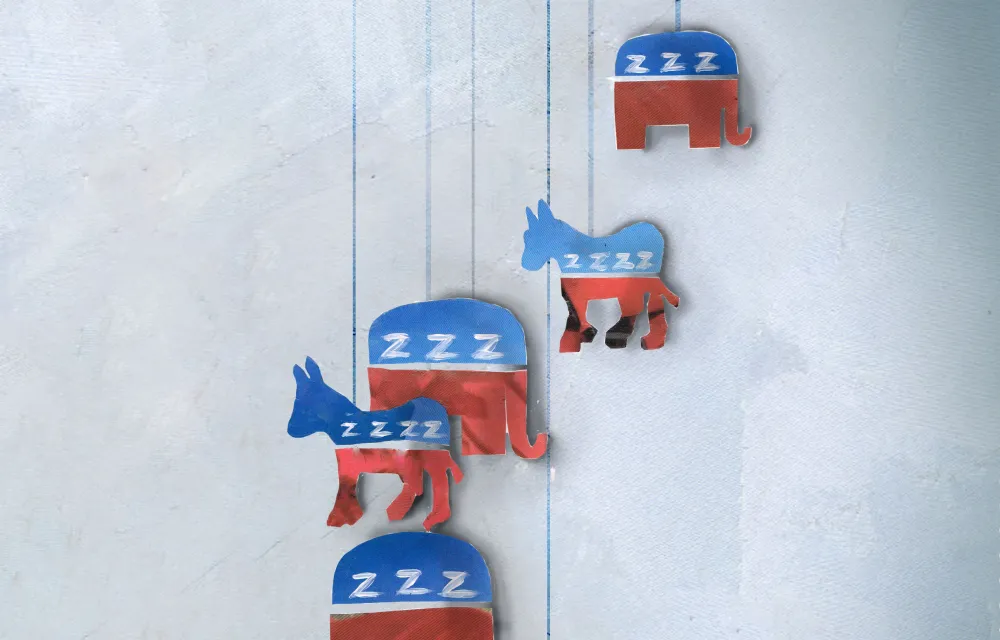
    Elephants and Donkeys Are Killing The United States: Why We Need Political Diversity

    written by: Kate Johnson
    While the opinions expressed in our own social networks may overwhelmingly predict our presidential candidate winning by a landslide, almost half of Americans polled support the candidate we oppose. As... more
  • Load More Issues

In-Mind Blog

  • 14.04.2014 | Solid Science

    The year the journals changed

    written by: Roger Giner-Sorolla
    Where do all the studies come from? Behind every headline trumpeting a new finding in psychology, you can usually find an article in a peer-reviewed psychology journal. But how reliable are these findings? This is what many scientists have recently started to wonder. Because of this, journals in psychology are starting to insist on better reporting of research studies. In this first post of a two-part series, I will explain some of the standards that have typically been used to judge whether a study deserves publication or not. more
  • 09.04.2014 | Culture

    Colorful Culture

    written by: Charis Eisen, Keiko Ishii
    As a world without colors would be extremely boring, we are luckily able to perceive various different colors that enrich our environment. Recently, Keiko Ishii and colleagues found that the colors we prefer and use for our paintings vary systematically across cultures. But that doesn’t mean that tomorrow’s multi-cultural world is becoming black-and-white or grey, rather there is hope that it will become even more colorful than it is today. In this post, we will illustrate how individuals and cultures engage in mutual construction and thus enhance variety. more
  • 31.03.2014 | Announcements and News

    Inequality: Minority disadvantage or White privilege? - And why it matters

    written by: Ellie Shockley
    In this blog post, I will discuss research showing how framing ethnic inequality in terms of White advantage versus minority disadvantage impacts how Whites and minorities understand inequality and thus how we should address inequality. more
  • 28.03.2014 | Political Psychology

    Bleeding-heart liberals and hard-hearted conservatives: Political dehumanization in the United States

    written by: Jarret Crawford
    My previous blog post covered new research showing that liberals and conservatives are prejudiced against one another to an equal degree. In this post, I will review evidence that liberals’ and conservatives’ prejudices lead them to dehumanize their political opponents—that is, to see them as less than human. more
  • 24.03.2014 | Culture

    Why Madonna was right: Music really does make the people come together

    written by: Marieke van Egmond
    In August 2000, global superstar Madonna released the single “Music” from her soon to be hit album. Other than the brilliant lyrics “Do you like to Boogie woogie”, you might remember that one of the lines in the chorus was “Music makes the people come together.” In this post, I will discuss the social psychological research, which suggests that she was more right then even she must have thought. more
  • 21.03.2014 | Interdisciplinary Inquiries, Current Events, Political Psychology

    Is banning bossy enough to enact real social change? Celebrity activism and the “Ban Bossy” campaign

    written by: Jessica Tomory
    Recently celebrity activists such as Beyoncé, Jenifer Garner, and Sheryl Sandberg have thrown their weight behind a campaign to ban the term “bossy” to describe women (banbossy.com, #banbossy). The goal of the campaign is to encourage young women to step into leadership roles and to assert themselves in the classroom and in life. In this blog I highlight the social value of celebrity activism and I highlight important caveats of celebrity activism based on science. more
  • Load more blog posts

Book Reviews

Buried Secrets: Rememberance of Things Past, a Review by Christopher Perez

reviewed by: Christopher Perez

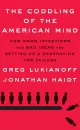
The Coddling of the American Mind, reviewed by Dylan Selterman

reviewed by: Dylan Selterman

My Year of Rest and Relaxation, reviewed by Andrew Archer

reviewed by: Andrew Archer

The Hope Circuit, Reviewed by Joe Smith

reviewed by: Joe Smith

Social Psychology: Revisiting the Classics (2nd Edition)

reviewed by: Richard Skaff

Most Read

  • Magazine Issue 06/2024 - Special issue on sport psychology

    Psychological aspects of elite performance in new Olympic disciplines: The case of climbing

    written by: Xavier Sanchez, Julian Henz, Cécile Martha, Jerry Prosper Medernach
  • Magazine Issue 12/2019

    Just a compliment? Why positive gender stereotypes can be more harmful than they seem

    written by: Lea Hartwich, Julia C. Becker
  • Magazine Issue 01/2016

    From the Editors: On the Current State of Science Journalism

    written by: Dylan Selterman
  • Magazine Issue 10/2013

    Sense-making through science

    written by: Bastiaan Rutjens, Frenk van Harreveld, Joop van der Pligt
  • Magazine Issue 09/2008

    Penetrating the Circle of Death: Why People are Dying (and Killing) Not to Die

    written by: Daniel Sullivan, Jeff Greenberg

The Inquisitive Mind Magazine is supported by:

  • DGPs
  • C-SEB

Menu

  • The Magazine
  • Blog
  • Book Reviews
  • The Foundation
  • Donate
  • facebook
  • twitter
  • instagram
  • print
  • RSS Feed

About Us

In-Mind is a voluntary science communication project. We enable scientifically working psychologists to present their research topics in a scientifically sound, understandable and entertaining way for an interested audience: Psychology by scientists for everyone....more

Footer menu

  • Imprint
  • Data Protection
Clear keys input element