  • INT
  • DE
  • FR
  • IT
  • NL

User account menu

  • Log in
Home
  • The Magazine
    • All Issues
    • Glossary
    • For Authors
    • Magazine Team
  • Blog
    • All Blog Posts
    • For Authors
  • Book Reviews
    • Book Reviews
  • The Foundation
    • What is In-Mind?
    • Credits
  • Donate

Psychology for You!

  • Magazine Issue
    04/2026

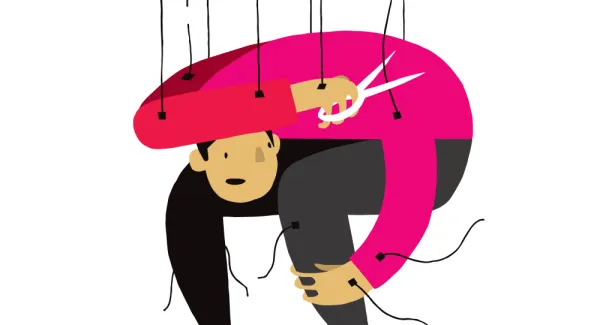
    Trapped by tranquility: Understanding dependence on benzodiazepines

    • written by
    • Joana Mihani
    Benzodiazepines offer relief from anxiety and insomnia , yet their calming effects can quietly lead to physical and psychological dependence . This piece explores how that reliance develops and why withdrawal requires support and patience. Recovery is possible when guidance, compassion, and gradual healing replace fear.
    Read more
    • Log in to post comments

  • Magazine Issue
    04/2026

    Now is the time – A discussion on current sexual misconduct prevention and provider readiness

    • written by
    • Julia L. Lancaster
    Despite many efforts to prevent sexual misconduct, this unwanted behavior persists in private and public spaces. Given the prevalence of sexual misconduct and the likelihood that mental health care providers will be called upon during their careers to support survivors, how prepared are they?
    Read more
    • Log in to post comments

  • Magazine Issue
    03/2026

    How do we interpret social situations marked by ambiguity?

    • written by
    • Lisa Vos,
    • Tom Smeets,
    • Jonas Everaert
    Imagine sending a message to a friend, and hours pass without a reply. Did you do something wrong? Are they upset? Or are they simply busy? Every day, we face moments like these: ambiguous social situations that leave us wondering what others think or feel. How we interpret these moments can shape our emotions, thoughts, social connections, and our own behavior, and can even impact our mental health. In this article, we review recent research from our team that sheds light on how people make sense of such ambiguous social cues, and why some of us tend to interpret them...
    Read more
    • Log in to post comments

  • Magazine Issue
    03/2026

    Children in front of a screen: what is the impact of technology on their development?

    • written by
    • Marica Notte,
    • Daniela Renzi
    The use of technology, particularly digital devices, is having a negative impact on children’s psychological and physical development. This is largely due to two factors : today’s generations are growing up in an increasingly digital environment , and parents often allow extensive or unregulated use. In response, the international medical community has put forward recommendations aimed at regulating device use to minimize both short and long-term consequences.
    Read more
    • Log in to post comments

  • Magazine Issue 04/2026

    Trapped by tranquility: Understanding dependence on benzodiazepines

    written by: Joana Mihani
  • Magazine Issue 04/2026

    Now is the time – A discussion on current sexual misconduct prevention and provider readiness

    written by: Julia L. Lancaster
  • Magazine Issue 03/2026

    How do we interpret social situations marked by ambiguity?

    written by: Lisa Vos, Tom Smeets, Jonas Everaert
  • Magazine Issue 03/2026

    Children in front of a screen: what is the impact of technology on their development?

    written by: Marica Notte, Daniela Renzi
  • Magazine Issue 04/2018

    Bad day? How it can seem even worse for some

    written by: Michelle Lemay, Brittney Holcomb
    Many people do not realize how often our emotions affect us. Our emotions dictate what things we focus on or attend to, how we interpret things, and what things we... more
  • Magazine Issue 04/2018

    Improving the Disclosure of Information in an Investigative Interview: Rapport building and the Physical Environment

    written by: Katherine Hoogesteyn, Ewout Meijer, Aldert Vrij, Harald Merckelbach
    When you think about an interrogation room, what do you picture? A small, dull, and anxiety -provoking room? You may be right; some interrogation rooms look like this. However, does... more
  • Magazine Issue 01/2018

    Welcome to the Matrix! Opportunities and Risks of the Virtual World

    written by: Sarah Mayr

    It's been almost 20 years since Neo, "The One", booted up to fight the machines in the global smash hit The Matrix. Once painted as a dark and foreboding frontier... more
  • Magazine Issue 01/2018

    Cooperation in social dilemmas: How can psychology help to meet climate change goals?

    written by: Rachel New, Julian Savulescu, Nadira S. Faber
    Effectively managing shared natural resources is essential to protecting and improving our physical environment. This cannot be done without cooperation at international, national and local levels. Bringing together research on... more
  • Magazine Issue 01/2018

    Selfie-Esteem: The Relationship Between Body Dissatisfaction and Social Media in Adolescent and Young Women

    written by: Bindal Makwana, Yaeeun Lee, Susannah Parkin, Leland Farmer
    Social media platforms like Instagram and Facebook have become ingrained in the lives of countless individuals. With adolescents and young adults, particularly young women, being the primary users of such... more
  • Magazine Issue 07/2017

    Straight talk about gaydar: How do individuals guess others’ sexual orientation?

    written by: Fabio Fasoli, Peter Hegarty
    Individuals guess women’s and men’s sexual orientation on the basis of visual, non-verbal, and vocal cues. People use these cues as signs of others’ sexual orientation . Here, we review... more
  • Load More Issues

In-Mind Blog

  • 05.05.2014 | Culture

    Can music create intercultural understanding? According to Madonna (and psychological research), it can!

    written by: Marieke van Egmond
    In my last blog, I argued that Madonna’s lyric of ‘music makes the people come together’ has a scientific basis. There are scientific studies that support the claim that music indeed increases cooperation and, thus, brings people together. But, as you might remember, the second line in the chorus of Madonna’s song is: ‘Music mix the bourgeoisie and the rebel’. In this blog, I will discuss whether she is citing the literature correctly or not. more
  • 02.05.2014 | Solid Science

    Pre-registration watch part 1: Detecting deception

    written by: Anna van 't Veer
    In this blog post, I will report on the experiences of social psychologists, such as myself, with committing ourselves to detailed descriptions of the hypotheses and other specifics of experiments before we run them. In part 1, I briefly cover some basics about this so-called pre-registration and then I will discuss my own experience with a pre-registration in the online journal Frontiers about unconscious deception detection. more
  • 28.04.2014 | Meaning Making

    Free will without metaphysics

    written by: Andrew Monroe
    Despite the resurgence of interest in free will, there remains confusion and disagreement regarding free will’s role in social life, in particular, how people understand free will and whether free will guides blame and praise for others. In this blog post I argue that we need to pay closer attention to the folk concept of free will in order to resolve the confusion surrounding free will in everyday life. more
  • 25.04.2014 | Happiness & Well-being

    Where are the genes for psychological traits?

    written by: Marcus Munafo
    In this blog post, I will discuss the methodologies available for identifying genetic influences on psychological traits, why it has proved so difficult to reliably identify specific genes, despite 20 years of effort, and what this tells us about the nature of these genetic influences. more
  • 21.04.2014 | Gender

    Marrying smart or marrying instead of being smart? The goal conflict between MRS degrees and STEM degrees

    written by: Cathleen Clerkin
    In this blog post, I review a number of studies that suggest that telling women to focus on their MRS degree (aka getting married) while in college can make women less interested in earning a STEM degree (Science, Technology, Engineering & Math). Why does this matter? Because the STEM fields are in desperate need of women. Luckily, research also suggests that women in STEM are more desirable than women may realize. more
  • 18.04.2014 | Violence & Aggression

    Sticks and stones and breaking bones: Social psychology and school aggression

    written by: Sian Jones
    Bullying is a pervasive issue in schools today. This is one of two blog posts that will look at school aggression from the perspective of contemporary social psychology. In this post, I'll examine the role of groups in encouraging bullying. In my next post, I'll look at the perspective of the bullied victims. When it comes to bullying, it seems that groups can both be a part of the problem and the solution. more
  • Load more blog posts

Book Reviews

Buried Secrets: Rememberance of Things Past, a Review by Christopher Perez

reviewed by: Christopher Perez

The Coddling of the American Mind, reviewed by Dylan Selterman

reviewed by: Dylan Selterman

My Year of Rest and Relaxation, reviewed by Andrew Archer

reviewed by: Andrew Archer

The Hope Circuit, Reviewed by Joe Smith

reviewed by: Joe Smith

Social Psychology: Revisiting the Classics (2nd Edition)

reviewed by: Richard Skaff

Most Read

  • Magazine Issue 06/2024 - Special issue on sport psychology

    Psychological aspects of elite performance in new Olympic disciplines: The case of climbing

    written by: Xavier Sanchez, Julian Henz, Cécile Martha, Jerry Prosper Medernach
  • Magazine Issue 12/2019

    Just a compliment? Why positive gender stereotypes can be more harmful than they seem

    written by: Lea Hartwich, Julia C. Becker
  • Magazine Issue 01/2016

    From the Editors: On the Current State of Science Journalism

    written by: Dylan Selterman
  • Magazine Issue 10/2013

    Sense-making through science

    written by: Bastiaan Rutjens, Frenk van Harreveld, Joop van der Pligt
  • Magazine Issue 09/2008

    Penetrating the Circle of Death: Why People are Dying (and Killing) Not to Die

    written by: Daniel Sullivan, Jeff Greenberg

The Inquisitive Mind Magazine is supported by:

  • DGPs
  • C-SEB

Menu

  • The Magazine
  • Blog
  • Book Reviews
  • The Foundation
  • Donate
  • facebook
  • twitter
  • instagram
  • print
  • RSS Feed

About Us

In-Mind is a voluntary science communication project. We enable scientifically working psychologists to present their research topics in a scientifically sound, understandable and entertaining way for an interested audience: Psychology by scientists for everyone....more

Footer menu

  • Imprint
  • Data Protection
Clear keys input element