- edited by
- Stella Wernicke
Reviewers: Dr. Kim van Broekhoven and Dr. Umberto León Domínguez
Editorial Assistant: Zoey Chapman
The impact of Artificial Intelligence (AI) is closely tied to human cognitive abilities – mental processes that determine how we interpret, evaluate, and respond to AI-generated information. Understanding this interplay is essential for designing AI systems that align with human cognition, enhancing user engagement while reducing risks such as automation bias (the tendency to overtrust AI outputs) and cognitive overload (the state in which information exceeds mental capacity). In this article, we introduce the concepts of working memory, cognitive flexibility, and attention and explore how they shape the way we interact with AI. We illustrate how these cognitive functions influence both opportunities and challenges of AI use and highlight how AI systems can be designed, adapted, and complemented by cognitive training to support more effective human-AI collaboration.
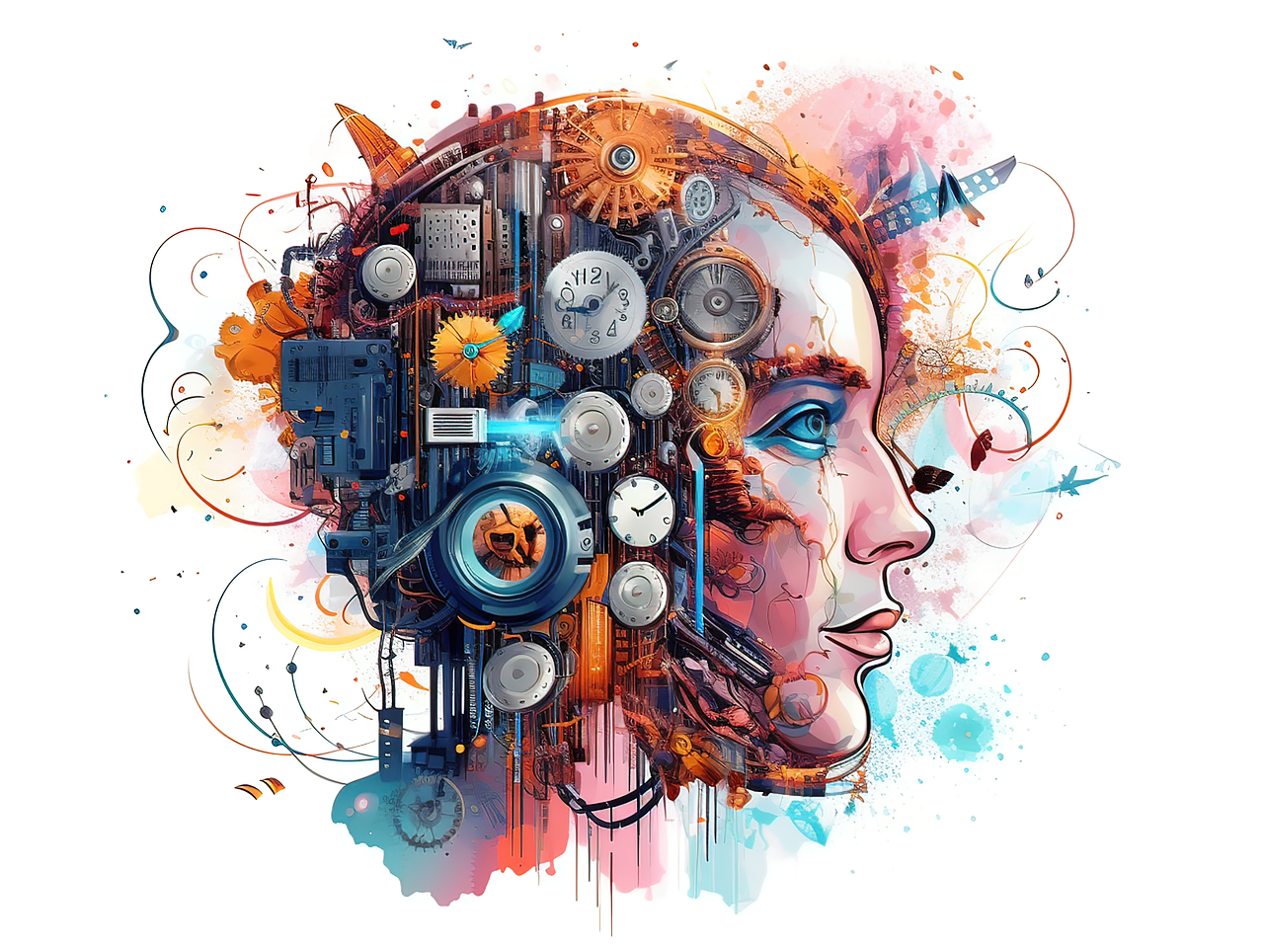
AI and the human mind
Explore how cognitive functions influence our interaction with AI. Learn how understanding these processes can improve AI collaboration and reduce risks.
The rapid development of AI has made it an indispensable part of our daily lives. From ChatGPT shaping digital conversations to AI-driven decision-making in finance, healthcare, and industry, these systems influence broad aspects of our daily routines. While AI offers efficiency, predictive accuracy, and scalability, its real-world benefits and risks are determined by how humans process and interpret AI-generated outputs [1]. Our cognitive functions dictate whether AI enhances our decision-making capabilities or leads to unintended consequences, such as overreliance, misinterpretation, or cognitive overload.
At the heart of this dynamic lies the interplay between human cognition and AI-generated information. Cognitive mechanisms influence how well individuals critically evaluate AI-generated suggestions, discern relevant from irrelevant information, and adapt their strategies accordingly. As AI systems grow in complexity and their outputs become more intricate, the human ability to meaningfully engage with these technologies becomes a key determinant of their effectiveness. A deeper understanding of cognitive processes is therefore essential – not only to help individuals navigate AI interactions successfully but also to ensure that AI systems are designed in ways that align with human cognitive constraints.
The interplay between cognition and AI
The effectiveness of AI depends on our cognitive abilities, such as working memory, cognitive flexibility, and attention, which shape how we process AI-generated information.
Cognitive functions are the core mental processes that enable individuals to perceive, process, and respond to information. They include multiple processes such as attention and decision-making. These processes shape how users interact with their environment, influencing how they gather, interpret, and respond to information in dynamic settings. This applies to a wide range of interactions, from handling complex social situations to making strategic decisions in professional and everyday life.
To understand how humans interact with AI-generated information, we focus on three key cognitive functions that we will introduce below: working memory, cognitive flexibility, and attention. These functions are fundamental components of more complex cognition and are central to models of information processing [2,3]. Each plays a distinct role in how individuals retain, evaluate, and shift between sources of information – abilities that are particularly relevant in the context of AI-supported decision-making.
Working memory and AI
Working memory is responsible for holding and manipulating information over short periods [4]. It plays a crucial role in evaluating AI-generated recommendations, as users must retain relevant contextual information while assessing the credibility and applicability of AI outputs. Particularly in interactions with automation technology (e.g., robots), working memory has been identified as a key determinant of whether users benefit from the system. Research indicates that individuals with higher information-processing ability and greater working memory capacity tend to profit from higher levels of automation. In contrast, those with lower information-processing ability and limited working memory capacity often experience difficulties, as increased automation can overwhelm their cognitive resources rather than enhance performance [5].
Cognitive flexibility and AI
Cognitive flexibility refers to the ability to adapt thinking and behavior in response to changing circumstances [6]. As the complexity and dynamic nature of our daily lives rapidly increases with the integration of AI, the need for frequent transitions between different cognitive demands – such as independently evaluating information and interpreting AI-generated recommendations – becomes increasingly relevant. Based on fundamental research demonstrating that individuals with higher cognitive flexibility perform better in complex situations, such as multitasking scenarios [7], we assume that cognitive flexibility is also a key factor in successfully interacting with AI. Specifically, individuals with greater cognitive flexibility may be better at managing multiple cognitive demands simultaneously, allowing them to efficiently process and evaluate AI-generated recommendations while maintaining overall task performance.
Attention and AI
Attention is the mental ability to focus on relevant information while filtering out distractions [8]. It is fundamental to effective information processing, as it determines which stimuli are prioritized for deeper cognitive engagement. In interactions with AI, attention plays a critical role in guiding users toward relevant system outputs while preventing cognitive overload. The ability to sustain attention is particularly important when dealing with complex or rapidly changing AI-generated information, ensuring that users remain engaged and responsive to key insights. Additionally, selective attention helps individuals distinguish between relevant and irrelevant AI recommendations, enhancing decision-making efficiency. Research suggests that attentional control influences how effectively users can integrate AI-generated suggestions into their cognitive workflow, with individuals possessing stronger attentional regulation being better equipped to manage high-information environments [9].
Three contrasting patterns of AI-cognition interaction
The interaction between cognitive functions and AI-generated outputs can lead to three distinct patterns of behavior:
- Automation bias: Users with limited cognitive abilities, e.g., attention, may uncritically accept AI decisions, assuming their accuracy [10]. When users overtrust AI without critical evaluation, errors can propagate, leading to suboptimal decision-making [11]. This is particularly relevant in high-stakes environments such as medical diagnostics and financial forecasting, where blind reliance on AI outputs may result in costly mistakes.
- Cognitive overload and disengagement: AI-generated recommendations can sometimes present too much information or be overly complex, leading to cognitive overload. When this happens, users may disengage from the decision-making process, either ignoring AI outputs entirely or deferring responsibility to the system. Research suggests that excessive cognitive demands can reduce user engagement and undermine the benefits of AI assistance [12].
Aligned interaction: Ideally, users strike a balance between reliance and skepticism, leveraging AI-generated insights while maintaining independent judgment. This occurs when cognitive demands are aligned with human capacities, allowing users to engage effectively with AI-generated recommendations while avoiding overreliance. This fosters meaningful human-AI collaboration, leading to better decision-making outcomes [13].

Image 2
Cognition and adaptation to AI
Cognitive functions play a crucial role in facilitating adaptation to new technology and can support the effective integration of AI into our everyday lives.
Research across various domains has consistently shown that cognitive functions facilitate the adaptation to new technology, shedding light on the intricate dynamics of human adaptation to AI [14]. Individuals exhibiting more pronounced cognitive abilities, such as augmented working memory and heightened cognitive flexibility, demonstrate superior adaptation to new technology. For instance, a study on technology adoption among older adults found that those with higher cognitive functioning were more willing to adopt Instagram, an AI-driven social network app [15]. In contrast, the same study revealed no significant correlation between cognitive functioning and utilizing a fitness tracker or an e-health application, highlighting the complex and nuanced relationship between the ability to coordinate different cognitive processes and adaptation to new technology.
In the context of an aging population navigating constant technological innovation, cognitive functions play a vital role in how well older adults adapt to new technology. Research shows that pronounced cognitive abilities can effectively mitigate the negative impact of aging on technological adaptation [16]. Specifically, older adults with more pronounced cognitive functioning tend to handle new circumstances more effectively, interact more resourcefully with new technology, and ultimately achieve a smoother integration into daily life. Therefore, enhanced cognitive functioning enables individuals to better navigate the challenges posed by new technology, leading to improved overall adaptation.

Designing AI for cognitive compatibility
Understanding the interplay between human cognition and AI is crucial for designing AI that aligns with human capabilities, enhancing user engagement and reducing risks.
Given the profound influence of cognition on AI interaction, designing AI systems with cognitive compatibility in mind is essential for fostering usability, trust, and effective decision-making. To achieve this, AI systems should be designed to support and enhance human cognitive processes rather than overwhelm or mislead users [17]. Key principles to achieve this include:
- Optimize cognitive load: AI interfaces should present information in a structured, intuitive, and digestible manner, minimizing unnecessary complexity while maintaining transparency. There a several strategies that can help distribute cognitive effort efficiently and prevent information overload: adaptive interfaces adjust the amount of information presented based on user expertise; progressive disclosure reveals details incrementally as needed; multimodal feedback integrates visual, auditory, or haptic cues.
- Enhancing explainability: AI systems should provide clear, interpretable, and context-aware explanations of their processes and recommendations, enabling users to critically assess their validity. Explainable AI frameworks play a crucial role in bridging the gap between complex AI decision-making and human comprehension by offering insights into AI reasoning, confidence levels, and potential biases. This transparency fosters user trust and informed decision-making.
Personalized interaction models: AI should dynamically adapt to individual cognitive profiles, offering tailored levels of support based on user expertise, cognitive capacity, and task demands. This can be achieved through context-aware AI interventions that respond to user feedback, adjust complexity levels, and refine interaction patterns in real time. By aligning AI functionality with users’ cognitive strengths and limitations, systems can enhance efficiency, reduce frustration, and improve overall user experience.

Image 4
Cognitive training: Enhancing human cognition for AI interaction
Enhancing cognitive functions through targeted interventions, such as cognitive exercises and mindfulness practices, can help users better engage with AI and mitigate risks like automation bias and cognitive overload.
An important yet underexplored dimension of human-AI interaction is the trainability of cognitive functions. Research indicates that core skills such as working memory, attention, and cognitive flexibility – essential for effectively engaging with AI systems – can be strengthened through targeted interventions, including cognitive exercises, mindfulness practices, and adaptive learning tasks [18], [19]. However, evidence for far transfer is still debated – this means it is unclear whether targeted training of cognitive functions actually improves complex decision-making or critical reasoning [20]. Despite these limitations, such interventions may offer valuable support in high-demand environments by strengthening underlying cognitive control mechanisms. This perspective complements system-level design approaches by emphasizing the role of user-centered cognitive empowerment in fostering meaningful and resilient human-AI collaboration.
Summary
The interaction between artificial intelligence and human cognition is a key factor in determining the effectiveness of AI technologies. Cognitive functions such as working memory, cognitive flexibility, and attention influence whether users benefit from AI or experience challenges like automation bias and cognitive overload. While thoughtful AI design that accounts for human cognitive limitations can mitigate these risks, an equally important yet underexplored approach is empowering users to enhance their cognitive abilities. Research suggests that targeted training can strengthen these functions, enabling users to engage with AI more critically and effectively.
Future research should systematically integrate cognitive factors into AI development while also exploring cognitive training as a means to improve human-AI collaboration. Personalized AI interactions, adaptive systems, and improved explainability can help align AI technology with users' cognitive demands, while cognitive training interventions could further equip users for successful engagement. Ultimately, the effective use of AI depends not only on technological advancements but also on our ability to enhance and integrate human cognitive capabilities into AI-driven environments.
Bibliography
[1] U. V. U. Ismatullaev, and S. H. Kim, “Review of the factors affecting acceptance of AI-infused systems,” Human factors, vol. 66, no. 1, pp. 126-144, 2024, doi: 10.1177/00187208211064707.
[2] A. Diamond, “Executive functions,” Annual review of psychology, vol. 64, no.1, pp. 135-168, 2013, doi: 10.1146/annurev-psych-113011-143750.
[3] A. Miyake et al., “The unity and diversity of executive functions and their contributions to complex “frontal lobe” tasks: A latent variable analysis,” Cognitive psychology, vol. 41, no. 1, pp. 49-100, 2000, doi: 10.1006/cogp.1999.0734.
[4] A. Baddeley, "Working memory," Current Biology, vol. 20, no. 4, pp. R136-R140, 2010, doi: 10.1016/j.cub.2009.12.014.
[5] M. Jipp and P. L. Ackerman, "The impact of higher levels of automation on performance and situation awareness: a function of information-processing ability and working-memory capacity," Journal of Cognitive Engineering and Decision Making, vol. 10, no. 2, pp. 138-166, 2016, doi: 10.1177/1555343416637517.
[6] J. Cañas, J. Quesada, A. Antolí, and I. Fajardo, "Cognitive flexibility and adaptability to environmental changes in dynamic complex problem-solving tasks," Ergonomics, vol. 46, no. 5, pp. 482-501, 2003, doi: 10.1080/0014013031000061640.
[7] I. Koch, E. Poljac, H. Müller, and A. Kiesel, "Cognitive structure, flexibility, and plasticity in human multitasking—An integrative review of dual-task and task-switching research," Psychological bulletin, vol. 144, no. 6, p. 557, 2018, doi: 10.1037/bul0000144
[8] W. James, "The principles of psychology," Henry Holt, 1890.
[9] A. Gazzaley and L. D. Rosen, The distracted mind: Ancient brains in a high-tech world. Mit Press, 2016.
[10] R. Parasuraman and D. H. Manzey, “Complacency and bias in human use of automation: An attentional integration,” Human Factors, vol. 52, no. 3, pp. 381–410, 2010, doi: 10.1177/0018720810376055.
[11] M. Liebherr, E. Enkel, E. L. Law, M. R. Mousavi, M. Sammartino, and P. Sieberg, “Dynamic Interaction of Trust and Trustworthiness in AI-Enabled Systems,” International Journal on Software Tools for Technology Transfer, accepted for publication.
[12] M. R. Endsley, “From Here to Autonomy: Lessons Learned From Human–Automation Research,” Human Factors, vol. 59, no. 1, pp. 5–27, 2016 (original work published 2017), doi: 10.1177/0018720816681350.
[13] J. D. Lee and K. A. See, “Trust in automation: designing for appropriate reliance,” Human Factors, vol. 46, no. 1, pp. 50–80, Spring 2004, doi: 10.1518/hfes.46.1.50_30392.
[14] E. Gößwein and M. Liebherr, "Harnessing the power of adaptation: a pre-registered systematic review on executive functions and the adaptation to new technologies," Behaviour & Information Technology, pp. 1-16, 2024, doi: 10.1080/0144929X.2024.2417381.
[15] R. W. Berkowsky, J. Sharit, and S. J. Czaja, "Factors Predicting Decisions About Technology Adoption Among Older Adults," (in eng), Innov Aging, vol. 2, no. 1, p. igy002, Jan 2018, doi: 10.1093/geroni/igy002.
[16] S. J. Czaja et al., "Factors predicting the use of technology: findings from the Center for Research and Education on Aging and Technology Enhancement (CREATE)," (in eng), Psychology and Aging, vol. 21, no. 2, pp. 333-52, Jun 2006, doi: 10.1037/0882-7974.21.2.333.
[17] M. R. Endsley, “From here to autonomy: lessions learned from human-automation research,” Human factors, vol. 59, no. 1, pp. 5-27, 2017, doi: 10.1177/0018720816681350
[18] L. Y. Lee et al., "Cognitive flexibility training for impact in real-world settings," Current Opinion in Behavioral Sciences, vol. 59, p. 101413, 2024, doi: 10.1016/j.cobeha.2024.101413.
[19] M. Liebherr, A. Brandtner, M. Brand, and Y. Y. Tang, "Digital mindfulness training and cognitive functions: A preregistered systematic review of neuropsychological findings," Annals of the New York Academy of Sciences, vol. 1532, no. 1, pp. 37-49, 2024, doi: 10.1111/nyas.15095.
[20] A. Soveri et al., “Working memory training revisited: A multi-level meta-analysis of n-back training studies,” Psychonomic bulletin & review, vol. 24, pp. 1077-1096, 2017, doi: 10.3758/s13423-016-1217-0.
Image sources
Image 1–4: Pixabay (https://pixabay.com/)
- Log in to post comments